
Crafting as Digital Resistance: Detoxing through Tactility and Creativity
It’s Tuesday night, and I’m trudging through the rain to my best friend's house, clutching a plastic box close to my chest like some sacred treasure. No, it’s not cash or my laptop - it’s my box jammed full of craft supplies.
Once inside, about eight other friends and I all occupy various corners of the living room and get to work on just about anything. While knitting, collaging, and bedazzling, we flow between quiet moments of focus and noisy, animated catch-ups. It’s the perfect low-pressure midweek way to see my girlfriends and relax without staring at a screen. If you’re a college student who’s maybe attended or hosted a craft night, you’re definitely not alone. Crafting and DIY trends like crochet and jewelry-making have defined the 2020s and grown into a new way to socialize- especially without your phone.
Some say Luddite, but WGSN calls them the Gleamers: those of us who are over digital burnout and searching for new ways to stay connected that isn’t online, on social media, or anywhere near a screen. Now that school, work, and free time are all digitized, it feels like we never really get a break. The majority of Gen Z is projected to spend 18 to 20 years in front of a screen, nearly a quarter of their lives. There’s also the aspect of optimization. Technology removes the small, annoying tasks we encounter every day, making things easier and giving us more free time. But for most, more free time has led to more demanding schoolwork, more responsibilities crammed into a single role at work, and too much content to consume or buy. Optimization and technology give us back massive amounts of time, but it seems all we're doing is speeding up our lives. People want to feel accomplished by overcoming friction in their lives through building and creating themselves.
Crafting trends have exploded on TikTok since the pandemic. Then, they were the answer to spending your time in isolation. Now, they might be the answer to finding authenticity and control in a spiraling and aimless digital world. We crave tactile and emotional connection to physical things beyond a temporal digital society. And it doesn’t stop at social relevance; crafting is a huge business. Michael’s Company surpassed six billion dollars in annual revenue in 2025. Small businesses resonate too, from Philadelphia’s own Yay Clay pottery studio to the immensely popular New York crafting café Happy Medium.
But at its core, crafting is a community builder. Madison Seidel founded Dessert Before Dinner, a free monthly crafting club and social group in Philadelphia. Once a month, she hosts a Bring Your Own Craft at Washington Square Park. “For me, using my hands and doing arts & crafts is a great stress relief method and it takes me back to the simple joys of childhood and crafting with my siblings and parents.” Dessert Before Dinner isn’t exactly the inventor of BYOC, but it is definitely the most important proponent of its popularity in Philadelphia. “[Crafting] is a way to have a relaxing tactile experience.. It’s a great way to unplug and create something physical. Overall, I just want people to enjoy themselves, feel inspired, and make meaningful connections.” She states that crafting was her way of finding her community and getting involved off a screen, out in the real world with real strangers and future friends.
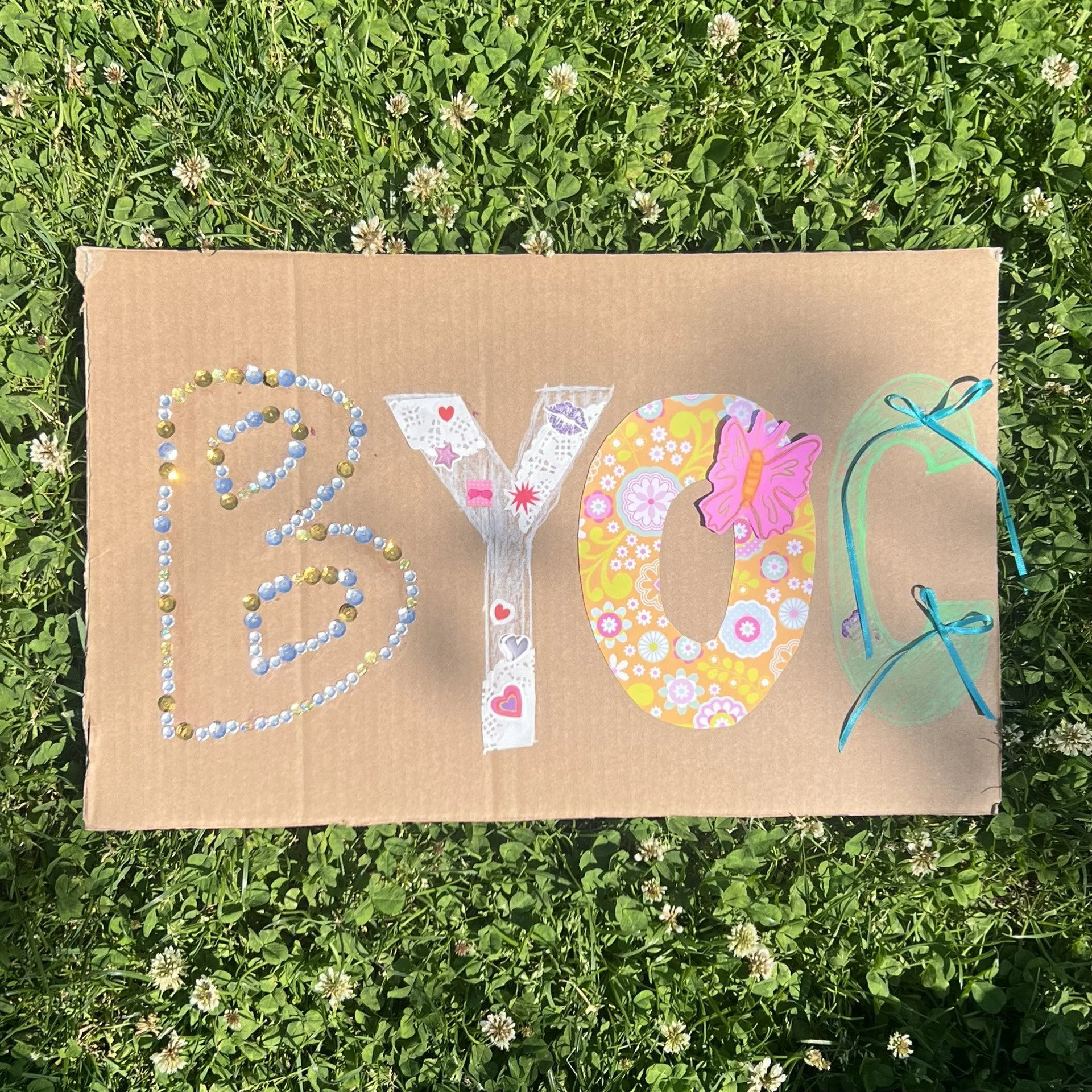
Taking Seidel’s sentiment and my own cravings for crafting, why not try to find more people who feel the same way at Drexel? So on a Sunday afternoon, my craft box and I trudged down to Drexel Park to host my very own BYOC. Sitting in the shade on a hot day, gluing sequins to cardboard, I listen to the people around me. We aren’t having life-changing conversations, but we are making the effort to be in physical proximity to each other and make something. These types of efforts are what make crafting, art-making, and other analog creativity so important to digital resistance and to how we shape the future.
“Doing anything creative in these times, where tech and tech companies are trying to take over our attention and lives, is digital resistance. Purposefully choosing to spend time off our social media allows the individual to resist the pressure of constant consumption and productivity online.” – Sophie S.
“Crafting is digital resistance because it pulls your focus back into the here and now. When we involve ourselves with our phones for prolonged periods of time, our minds begin to mesh our digital experience with our physical reality. By choosing to craft, read, or participate in any form of physical media, especially that which requires creativity, our focus is brought back into our personal, present state. In a world so connected to everyone and everything all the time, crafting brings us back into ourselves and allows us to take back our time and attention.” – Claire B.
Gen Z is at the tipping point of adulthood as the first digitally native generation. Will we choose a chronically online, AI-slop, brain-rotted path? Or an evolved, futuristic, and conscious one where we center pure human connectivity, supported and advanced by technology in a way that centers healthy human lives?
Obviously, the humble art of crafting isn’t the foolproof answer, but it’s a start. It’s an easy, accessible introduction to a tactile, physical, and grounded form of connection and creativity. We know all the issues of socialization today stem from the era of technology and optimization. What if we slowed down using the simple ways we know? And yes, there might be a little glitter or some buttons along the way.