
The Beginner’s Guide to Reading Romance
I read my first real book around ten years old, after my mom left a full Harry Potter set in my room one night, and I stayed up reading until morning. That love of books quickly led me, like many introverted kids in the 2010s, into the AO3 and Wattpad pipelines of One Direction fanfiction and endless online stories. They weren’t literary masterpieces, but they introduced me to my one true love: romance.
What I love most about romance is the one thing it promises: a happy ending. In a world that constantly feeds us tragedy, burnout, and bad news, knowing that a story will end on a hopeful note feels... comforting. But it is not just the ending that matters. It is everything in between. The growth, the heartbreak, the longing, the small moments that feel painfully real. It just took me a while to understand that.
When I started telling people which books I liked, I was met with quiet judgment. As the “smart kid,” I was expected to love the classics, so I read “1984”, “Frankenstein, “The Metamorphosis,” and “Brave New World.” I liked them, but none made me feel the way romance did. Eventually, I realized that the shame around loving romance came from something bigger: a genre largely dismissed because women love it. That doesn’t make it shallow. Romance can be just as thoughtful, emotional, and devastating as any so-called serious literature.
For a generation that consumes culture visually, socially, and emotionally, romance is no longer just about books. It influences aesthetics, cover design, merchandise, special editions, and even which stories get adapted into films and series. The way romance circulates online reflects how Gen Z connects to storytelling through mood, vibe, and emotional experience, not just genre labels.
Consider this your beginner’s guide. Everything you need to know to start reading romance, from subgenres and tropes to a few carefully curated recommendations from yours truly. No English degree here, but I do have a very serious Goodreads and StoryGraph history to back me up—four stars and up only (meaning: ABSOLUTELY YES).
A Note on The Spice-o-meter
'Spice’ is a TikTok/social media euphemism for the level of sexual content in a book. Although there is no official ‘spice scale’ on TikTok, you’ll often see people classifying books as low-spice (usually fade-to-black scenes), mild-spice, or what we know as smut (really, really spicy reads). Another way to talk about spice in books is with a pepper emoji (usually 1 pepper emoji for every 5). Contrary to popular opinion, there is a wide range of spice in romance books. There are very wholesome, sweet reads, and others that make me want to run to the confessional immediately. For this article, I am using a 5-pepper emoji scale (1 pepper = at least two explicit scenes; 5 peppers = do not read in public).
Contemporary Romance: Everyday love stories
Contemporary romance focuses on present-day love stories, following characters through very real emotional journeys rooted in self-reflection, vulnerability, and personal growth. These books are usually character-driven rather than plot-heavy, meaning the drama is less about war or crime rings and more about emotional baggage, bad timing, and figuring yourself out at inconvenient moments.
The most special part about contemporary romance is that it never just feels like a love story. Yes, two people are falling in love, but you are also watching them move through grief, healing, insecurity, career uncertainty, and the general chaos of being human. The romance pulls you in, but the emotional honesty is what makes it stick.
On the technical side, contemporary romance offers some of the widest trope variety in the genre, including friends-to-lovers, second-chance, grumpy x sunshine, workplace romance, and marriage of convenience. Most stories fall into a medium pace, balancing emotional depth with steady romantic tension.
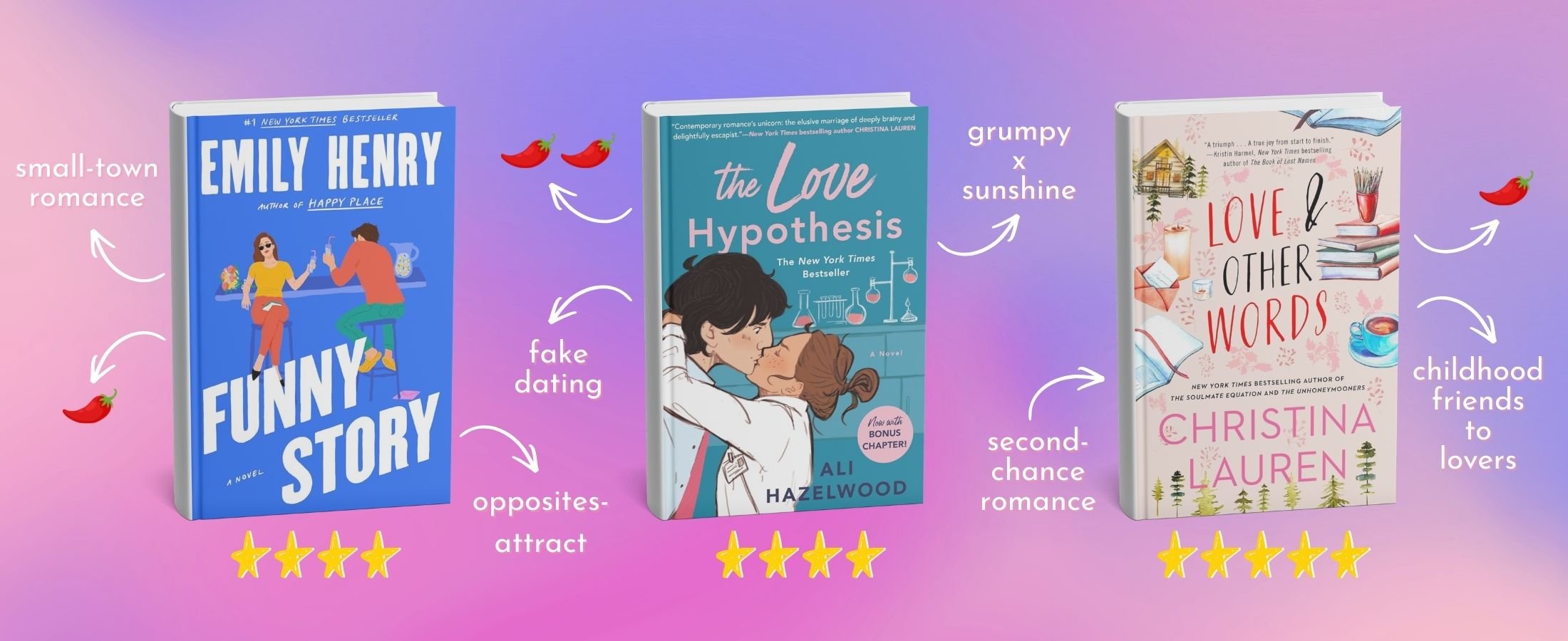
Emily Henry is one of the genre’s most recognizable authors. Her novels read like rom-coms at first glance, but her characters feel deeply personal. Funny Story is, in my opinion, Henry's best novel: a small-town, opposites-attract romance that is delightfully messy, emotionally sharp, and nearly impossible to put down.
Another standout is Ali Hazelwood, whose background as a neuroscientist shapes her popular “STEMinist” romances. Her books center smart, driven women working in science and technology fields, pairing academic ambition with humor and heart. They are nerdy, charming, and genuinely fun, even for someone in the humanities like me. The Love Hypothesis, her breakout novel and my favorite book of hers, follows a fake-dating mishap between a sunshine PhD biology student and the department’s most feared professor.
My final recommendation is Christina Lauren, the joint pen name of Christina Hobbs and Lauren Billings Luhrs. While the duo has written several contemporary favorites of mine (“The Unhoneymooners”, “The Paradise Problem”, and “The Soulmate Equation”), “Love and Other Words” stands in a category of its own. Quiet, emotional, and heartbreakingly beautiful, it explores young love, loss, and friendship through writing that feels almost lyrical. It is not a loud, flashy romance, but it is one that stays with you.
My Contemporary Romance Picks
Funny Story by Emily Henry | The Love Hypothesis by Ali Hazelwood | Love & Other Words by Christina Lauren
Sports Romance: High heat, high stakes
Ever fantasized about being a WAG? That is essentially what sports romance books are for. While many of these stories could technically be classified as contemporary romance, they have enough distinct qualities to earn a category of their own.
As the name suggests, sports romance centers around athletics, usually through the male love interest. There is something for everyone. College sports, professional leagues, hockey, football, baseball, and even Formula 1 all make an appearance. The level of “sports” varies by book. Some stories only mention games and practices in passing, while others offer detailed insight into the sport or league that shape the characters’ lives.
Sports and romance work especially well together because both rely on high emotional stakes. These characters are often driven, disciplined, and deeply committed to their careers, which makes vulnerability and emotional intimacy much harder to navigate. Watching someone who is used to control and competition learn how to let another person in is part of what makes the genre so satisfying.
Most sports romance novels exist within interconnected series rather than stand-alone books. These series usually follow a specific team or league, allowing readers to either commit to the entire group or pick and choose based on tropes and character dynamics they prefer.
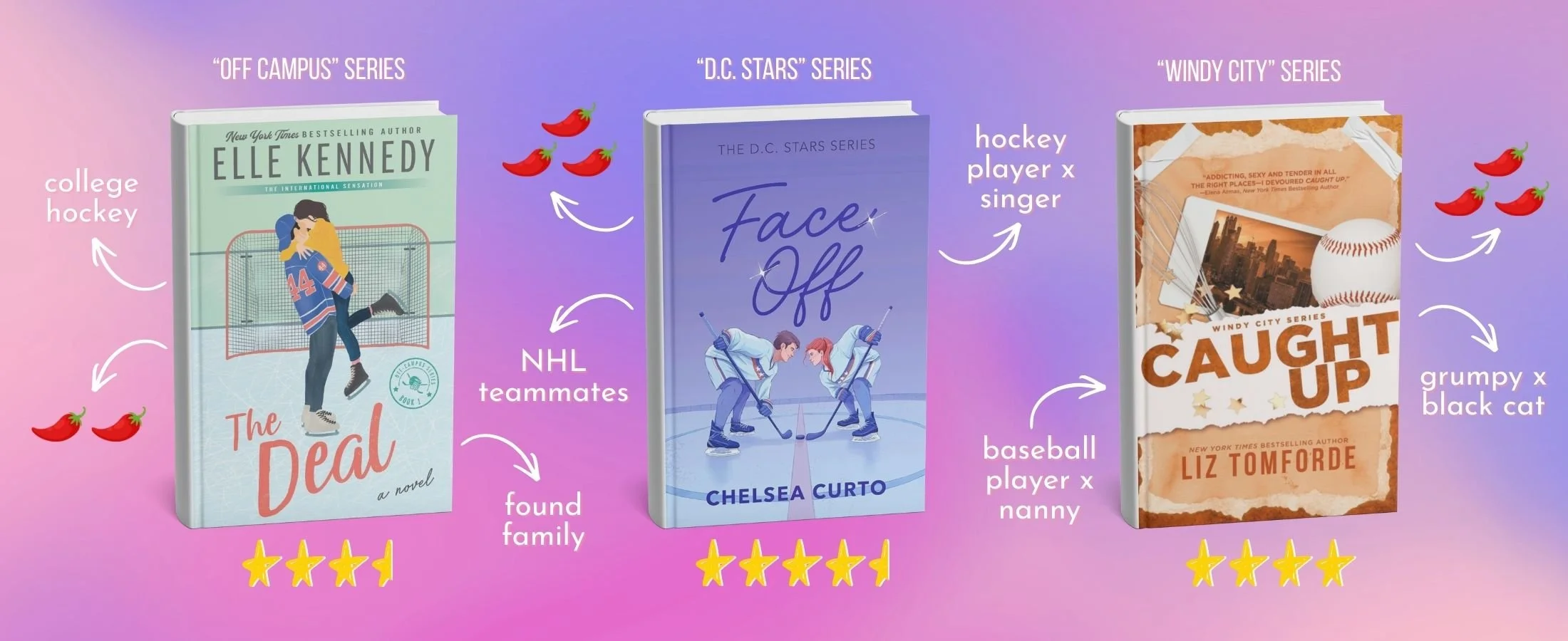
The most popular sport within the genre is hockey, largely because that is where sports romance first took off. Elle Kennedy’s “Off-Campus” series is often considered the original blueprint. Set at a fictional university, the books follow the love lives of four college hockey players. The characters are fun and charming, though very much in their early twenties era, so expect some immaturity and questionable decisions. This was the first sports romance series I ever read, and while it is not a literary masterpiece, it holds a special place in my heart and deserves recognition for shaping the genre.
If you are ready for something more grown-up, the “D.C. Stars” series by Chelsea Curto is a great next step. The books follow the members of a fictional NHL team based in Washington, D.C., and while there is a lot of hockey talk, it is surprisingly engaging. What stands out are the female main characters, who are also involved in the sports world as broadcasters, trainers, or fellow athletes. The characters are in their thirties, which brings a refreshing level of emotional maturity as they navigate divorce, grief, parenthood, and long-term relationships. The fifth book was just released, so it is the perfect time to jump into the series.
If hockey is not your thing, Liz Tomforde’s “Windy City” series offers a wider range of sports. Set in Chicago, the books follow athletes across the NFL, NHL, NBA, and MLB within the same shared universe. The series is known for strong banter, high chemistry, and very steamy romances. “Caught Up” is my top pick: an MLB single-dad romance featuring a nanny who also happens to be the coach’s daughter.
For readers interested in other sports, a few standout titles include “Racing Heart” by Grace Newman for Formula 1 fans, “The Wall of Winnipeg and Me” by Mariana Zapata for football lovers, and “Deep End” by Ali Hazelwood, which centers on competitive swimming and diving.
My Sports Romance Picks
The Deal by Elle Kennedy | Face Off by Chelsea Curto | Caught Up by Liz Tomforde
Romantasy: Romance with a bit of magic
Before we get into it, I want to acknowledge that romantasy has become a very debated topic online. Some readers argue that labeling fantasy written by or for women as "romantasy" undermines its credibility. Others see it as a helpful way to signal that romance plays a major role in the story. I am not here to settle that debate. I will say, though, that if you think a book with strong worldbuilding, layered characters, and solid writing suddenly loses value because it includes a love story, that might be worth rethinking.
At its core, romantasy refers to fantasy novels where romance is essential to the plot. The story would not work without the emotional relationship driving it forward. That does not mean these books lack depth or imagination, although yes, there are certainly some questionable entries out there. The appeal is that romantasy often prioritizes emotional investment over complicated lore. Personally, I love fantasy, but I do not always have the brain capacity for high fantasy. If I need to keep a fandom wiki open while reading, I am already stressed. Romantasy lets me enjoy magic and drama without feeling like I am studying for a test.
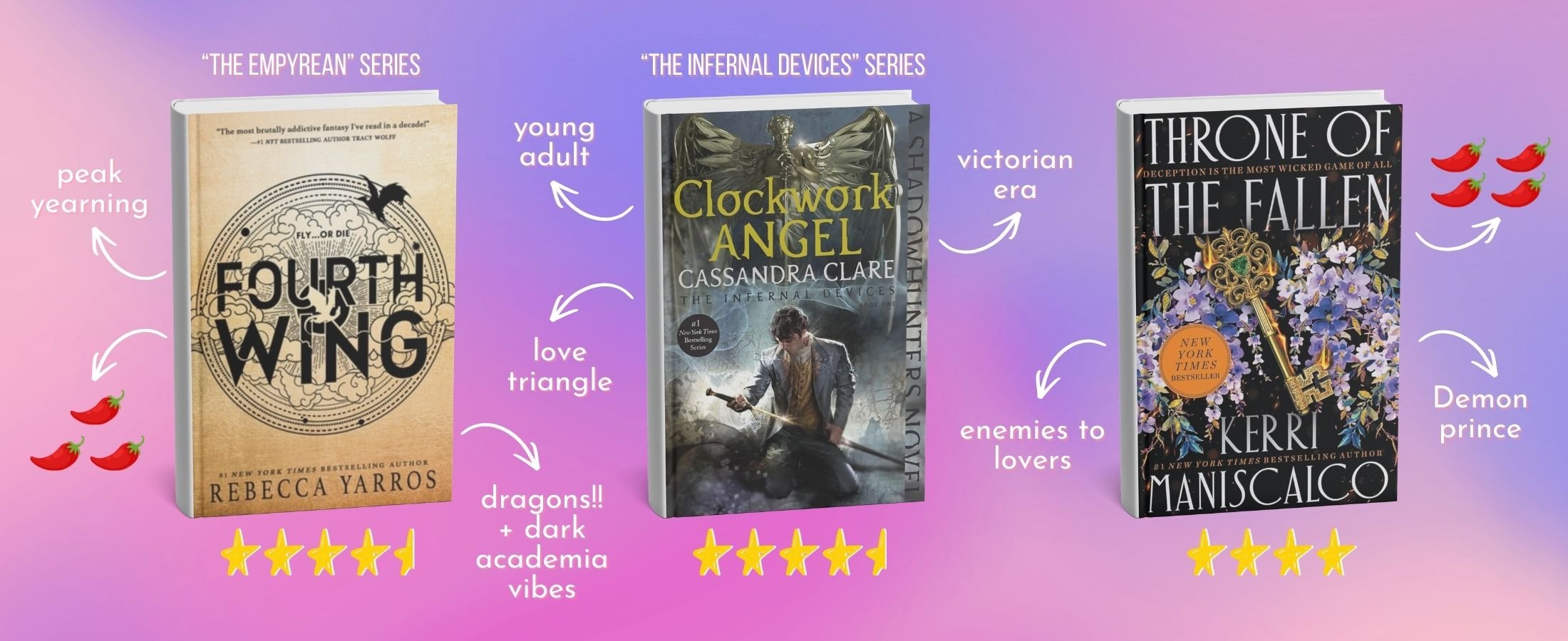
My latest romantasy obsession, mostly because I just reread it for the third time, is “The Empyrean” series by Rebecca Yarros. The planned five-book series is currently on book three and features dragon riders, political tension, devastating plot twists, and an alarming amount of emotional damage. I cannot say much without spoiling the experience, but this is one of those stories where everything slowly clicks into place. You notice new details on every reread, which somehow makes it hurt even more. The worldbuilding is engaging, but the characters and twists are what hook you.
Now, we have to talk about the classics! Cassandra Clare is responsible for two of the most iconic romantasy series of all time, “The Mortal Instruments” and its prequel, “The Infernal Devices”. “The Infernal Devices” is the one that ruined me (in the best way). Set in 1878 England, it blends fantasy with historical elements and delivers one of the most emotionally devastating love triangles I have ever experienced. The writing is immersive, the characters stay with you, and the emotional payoff is brutal in the best way.
My final pick is a standalone, which is rare for me because I usually want at least three more books immediately. “Throne of the Fallen” by Kerri Maniscalco completely changed my mind. The vibe is aristocratic and slightly unhinged, with demons, fae, witches, and a lot of tension. The worldbuilding is easy to follow and very much about the atmosphere. You are there for the mood, the chemistry, and the fun. Note, it is SPICY. This is the perfect book for when you want magic without mental exhaustion.
Romantasy sits right in the middle of escapism and emotion. It gives you dragons and demons, but it also gives you longing, chaos, and feelings that hit way harder than expected. If you want fantasy that still lets you focus on character relationships and emotional payoff, romantasy might be exactly your lane.
My Romantasy Romance Picks
Fourth Wing by Rebecca Yarros | Clockwork Angel by Cassandra Clare | Throne of the Fallen by Kerri Maniscalco
Diversity in the Romance Genre
I want to acknowledge that for much of history, romance has not been so welcoming of other stories that are not white heterosexual couples. Although great strides have been made to create space for authors and stories featuring diverse characters and a wider representation of what love actually looks like, these remain a minority in the genre.
For this reason, I want to share with you my favorite LGBTQ+ and BIPOC romance picks. Let me be clear: these are just a few. I encourage you to seek out more underrated authors who do an amazing job of writing diverse stories that allow everyone to enjoy and feel seen in romance.
My LGBTQ+ Romance Picks
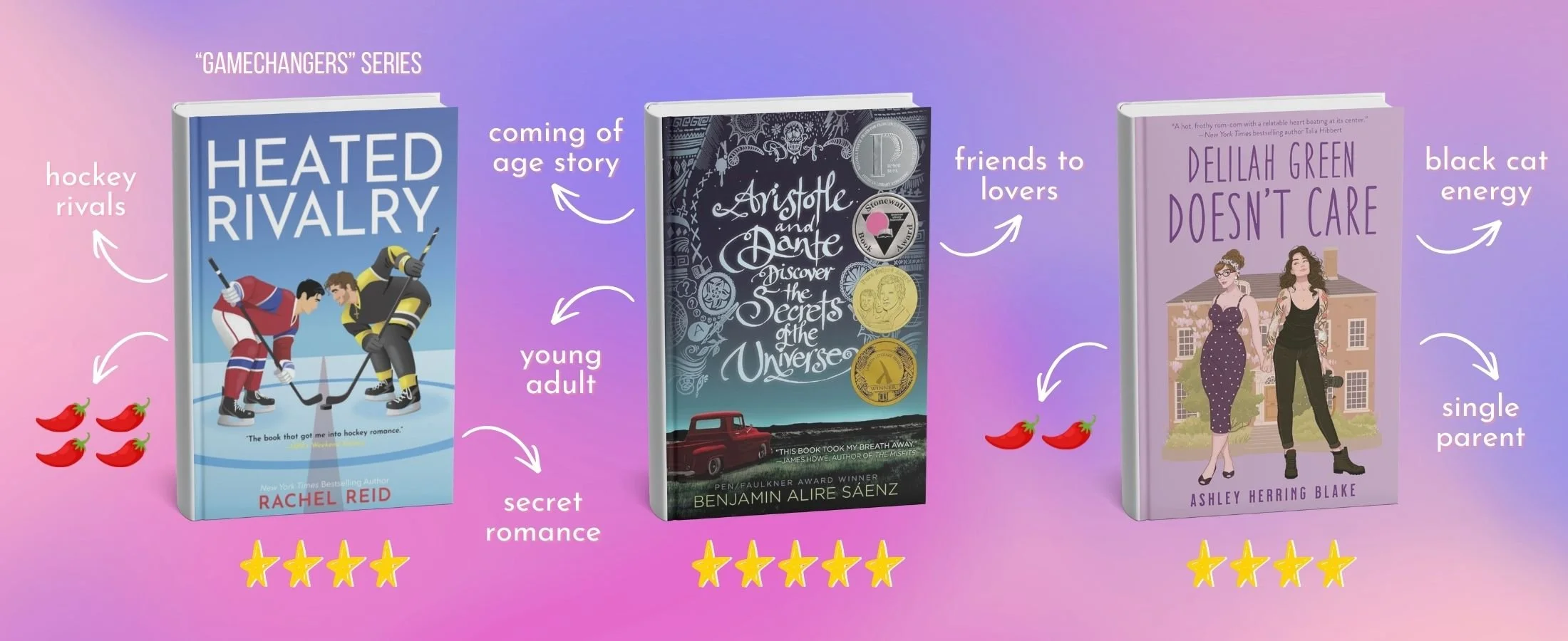
For readers looking for LGBTQ+ romance, these are a few stories that really stayed with me. Rachel Reid’s “Game Changers” series quickly became a favorite for combining sports romance with tender, emotionally grounded love stories. Watching these characters navigate identity, vulnerability, and very high-stakes public careers feels both intimate and hopeful. Also, if you haven’t watched “Heated Rivalry”, what are you doing? On a much quieter note, the “Aristotle and Dante” duology by Benjamin Alire Sáenz is one of those reads that gently breaks your heart. It is thoughtful, emotional, and deeply reflective, capturing the confusion and beauty of first love in a way that feels incredibly sincere. If you are in the mood for something lighter, “Delilah Green Doesn’t Care” by Ashley Herring Blake is just so fun. It has great banter, small-town chaos, and a main black cat character who absolutely does care.
Heated Rivalry by Rachel Reid | Aristotle & Dante Discover the Secrets of The Universe by Benjamin Alire Sáenz
Delilah Green Doesn’t Care by Ashley Herring Blake
My BIPOC Romance Picks
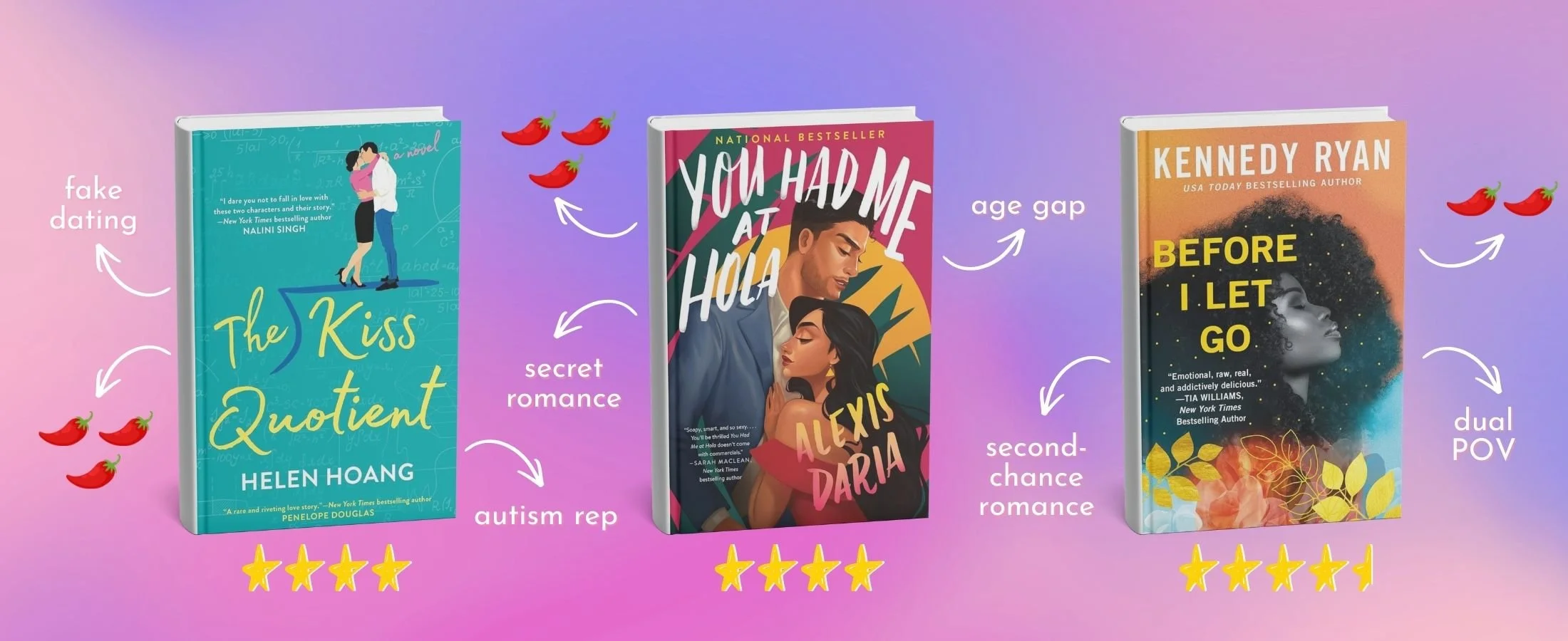
For BIPOC-led romance, these are three books that stuck with me for very different reasons. “The Kiss Quotient” by Helen Hoang was one of the first romances I read that really captures how messy and vulnerable dating can be. It is funny and sweet, but also deeply honest about communication, boundaries, and learning how to let yourself be loved. “You Had Me at Hola” by Alexis Daria is pure rom-com joy. The chemistry is immediate, the cultural references are rich, and the secret dating setup is done so well that you cannot help but root for them from the start. And then there is “Before I Let Go” by Kennedy Ryan, which is on a completely different emotional level. It is about grief, long-term love, and what happens when two people still love each other but have been changed by loss. It is heavy, deeply touching, and incredibly beautiful, and I would recommend it only when you are ready to let yourself go.
The Kiss Quotient by Helen Hoang | You Had Me at Hola by Alexis Daria | Before I Let Go by Kennedy Ryan
Congrats! You are ready to go on your own romance journey. However, before picking up your next read, I want to remind you that many of these recs are available at public libraries. But if you want a copy of your own, before jumping into Amazon, check out your local bookstore (like Philly’s first brick & mortar romance bookshop: Cupid's Bookshop).