Climbing Cringe Mountain: The High-Altitude Reality of Being Online
There’s a strange vertigo that follows the sound of your voice online. The moment you post your face, your work, your thoughts, you enter an infinite and entirely intimate arena, filled with millions of spectators. Welcome to Cringe Mountain, where the modern creative pilgrimage begins.
“You have to sometimes climb up a huge hill of cringe,” comedian Matt Rogers said in an episode of Las Culturistas. “Once you can scale that hill…you slide down into happiness and nirvana.” This is the climb. The treacherous ascent of exposure and experimentation that precedes cultural validation.
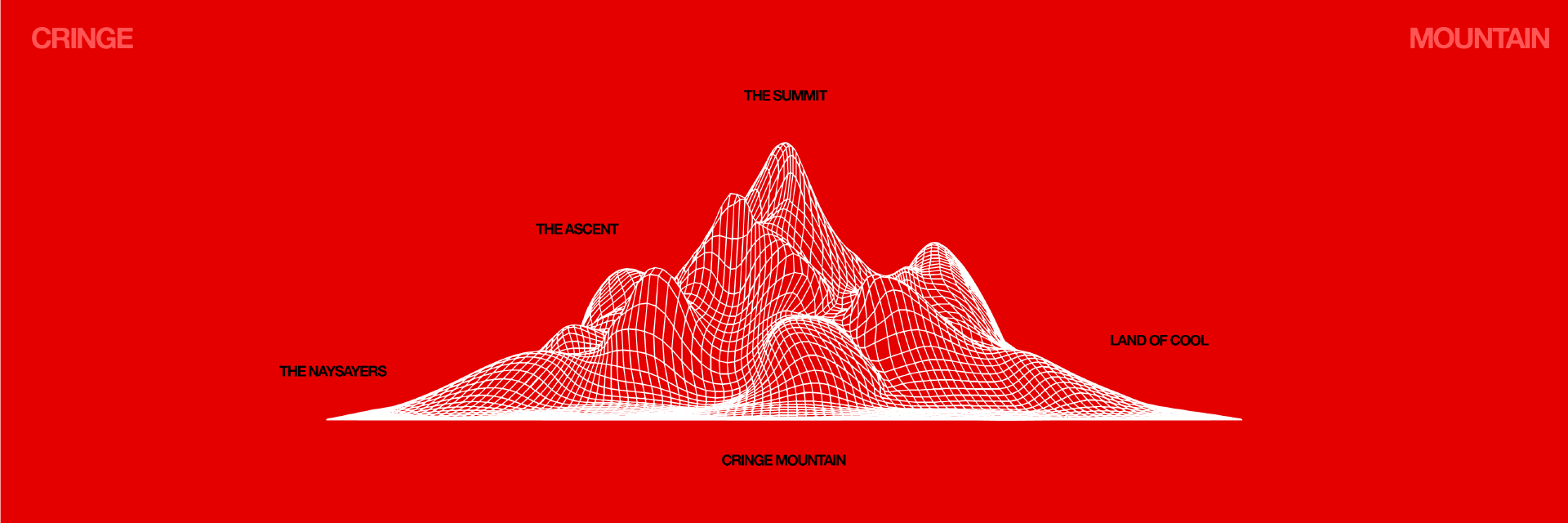
The climb represents every act of self-presentation in the digital age: uploading your first video, launching a brand, sharing an idea perhaps too sincere for the algorithm’s sardonic palette. The summit is deemed the Land of Cool: social media vernacular for the place where your earnest efforts finally transmute into cultural capital. It’s the gauntlet between who you are and who you might become if you just dared to keep going. But no one tells you that the only way to reach it is by scaling self-exposure itself.
Cringe Mountain isn’t just a metaphor; it’s more akin to an ecosystem. It’s the endless scroll of hooks and “get ready with me” videos that oscillate between performance and curation. It’s where influencers are canonized and crucified in the same breath, and where the internet’s collective consciousness plays judge, jury, and executioner. To post is an act of masochistic bravery.
THE ASCENT
At just 26, Canadian-born and Utah-based Noah Toly splits his time between closing deals with The Grit, a door-to-door collective built on resilience, and hosting Grit & Grace, a podcast spotlighting the creators, athletes, and entrepreneurs defined by relentless upward momentum.
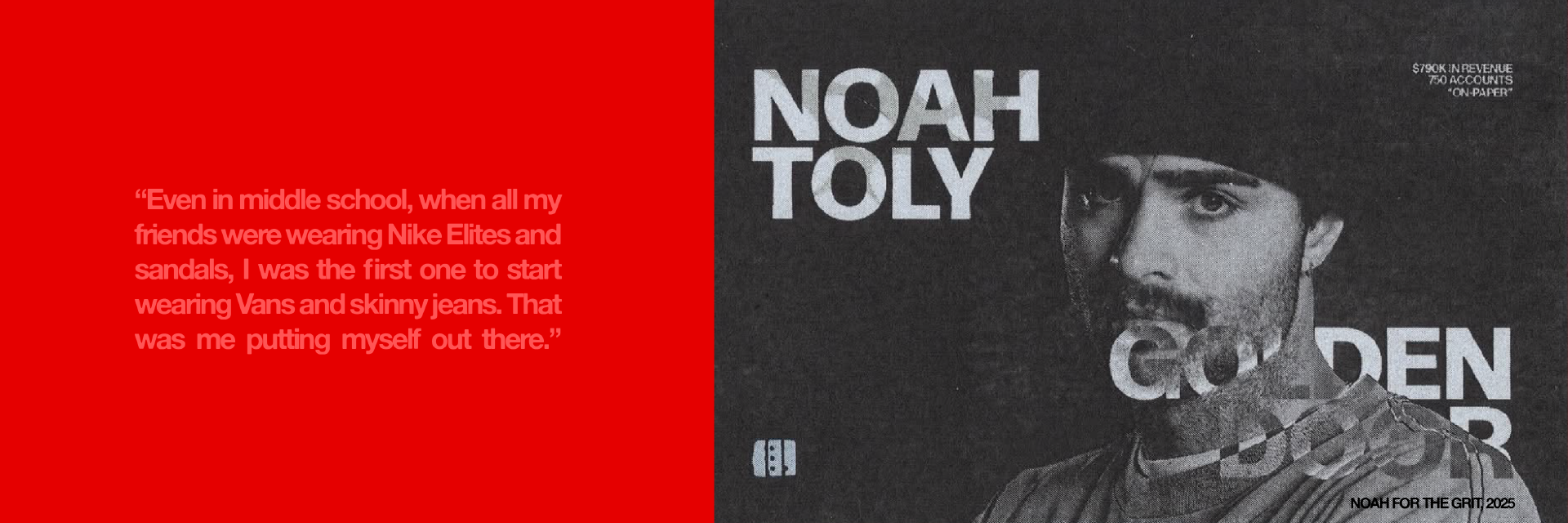
After sitting down with Toly, I learned he wasn’t always juggling his successes and his drive for more. He describes how these first moments of public exposure often come from small personal passions, pointing back to the early beginnings, to the exact footholds of Cringe Mountain. “Honestly, I’ve collected sneakers for 15 years, and I’d review basketball shoes performance-wise and post them. At the time, sneakers weren’t trendy. People were like, ‘Why do you like shoes?’ It was kind of a weird thing—‘That Noah kid really likes shoes.’ Even when I first got Instagram, I’d post my favorite sneakers—pictures of them, the box, what I was gonna wear for the next game. I think that was weird and interesting for people. People probably initially thought I didn’t care about performance, that I cared more about style, when in reality it was very intertwined,” he shared. “Even in middle school, when all my friends were wearing Nike Elites and sandals, I was the first one to start wearing Vans and skinny jeans. That was me putting myself out there.”
The ascent up Cringe Mountain is treacherous because your digital persona might almost feel like a caricature of yourself, and in a way, it is. You’re performing intimacy for an invisible audience. Every view feels like a vote of validity or social rejection. Authenticity is now its own aesthetic and an algorithmic requirement. Being ‘real’ has been commodified, packaged, and sold as a brand identity, while the original impulse of sharing out of sheer creative compulsion feels almost archaic or unnatural. Toly explains, "The branding of myself is just me posting what I really like. But sometimes it gets unhealthy. You don’t like a picture, so you take another one, then another one, then another one." Still, the only way to survive this landscape is to post even when it feels ‘too real,’ risking embarrassment as a necessary tax on expression.
And suddenly, something happens when you persist; what society had deemed as cringe becomes background noise. Toly reflects, “I feel like I’m a trendsetter. From a young age, the initial reaction when you do something different is… weird. But the consistency of you doing it turns into something really dope.”
He emphasizes the principle of living an “and” life by embracing multiple avenues without obsessing over outcomes. “Being an ‘and’ person is one of my biggest things… I’m going to run, do a podcast, write a book, and be a badass in my industry. Just creation. Do it without desire for an outcome.” This mindset allowed him to expand his creative output naturally: “And then doing a podcast… not to make money, but to impact and inspire people. People started associating me with what they saw online. Now people I don’t know will come up to me and say, ‘I’ve seen your podcast.’ And now I’m the podcast guy. But I’ve never been the podcast guy.”
As the climb continues, the stakes of remaining authentic begin to rise. “There comes a time where you’re so authentic, you want more people involved—not for clout, but because more followers means more impact,” Noah notes. “Doing things just to be popular dies eventually. Doing things with the desire to feed genuine content—that lasts.”
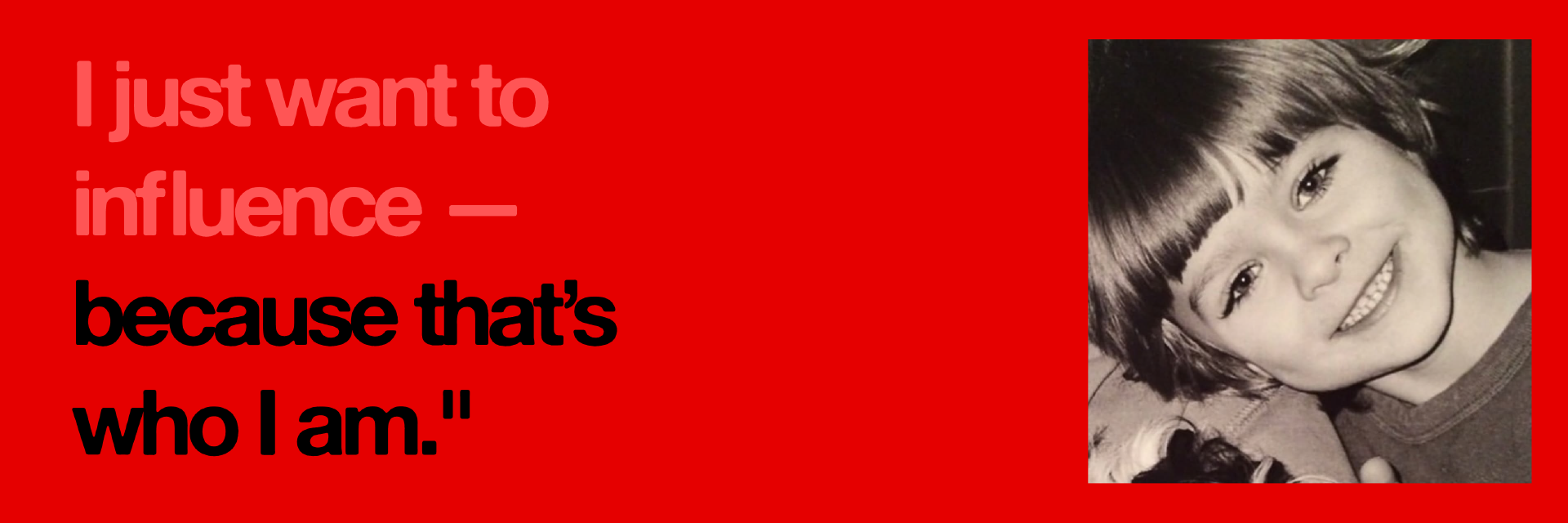
Toly also points out the subtle dynamics of social perception. “If you have status, you can do more. If you don’t, society doesn’t look at you like an asset. That’s a huge thing.” The interplay of status, perception, and authenticity informs every decision in the creator’s ascent. “As I'm starting to build my personal brand more, I’ve thought about metrics, gaining followers, getting a reel that pops off. But the reason I have a hard time posting more is because if I try too hard, it dips into an inauthentic place where I’m just trying to get views and be an influencer. I just want to influence—because that’s who I am."
REACHING THE SUMMIT
At the summit, perception shifts. You’ve become a reference point in someone else’s algorithm. But the summit is not stable ground; it’s a tightrope between authenticity and artifice. The internet loves the appearance of effortlessness but punishes anyone who excersises it too visibly. The Land of Cool is not a destination, but a delicate optical illusion dancing around the disguise of labor as leisure. The view from the top teaches one truth: the fear of embarrassment is a poor excuse for self-limitation. What makes something cringe in the moment is often what makes it culturally defining later.
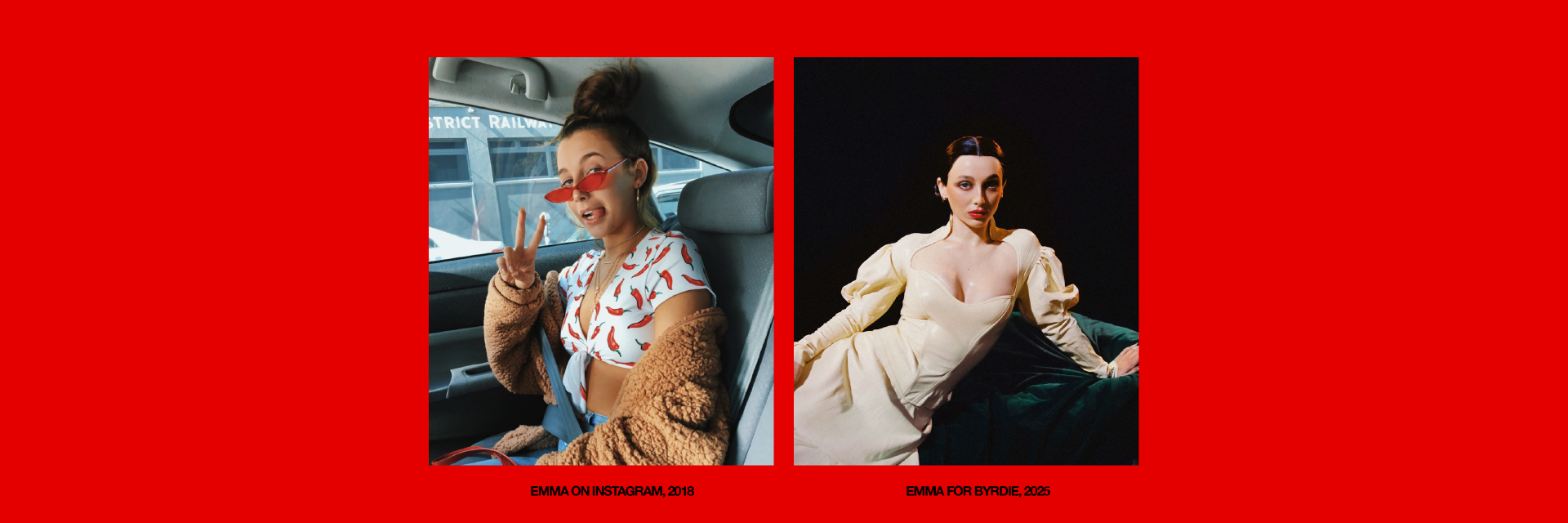
Consider the early Emma Chamberlain era: in the 2018 YouTube landscape, obsessed with perfect studio lighting, curated thumbnails, and lifestyle montages, she offered imperfection as her aesthetic. She filmed in her car, edited like a hyper-caffeinated teenager, and yet somehow, the world found it revolutionary. She wasn’t trying to be cool, and that, ironically, made her the coolest of all. Her success proved that being ‘cringe’ could, in the right lighting, be alchemized into charisma.
THE DESCENT
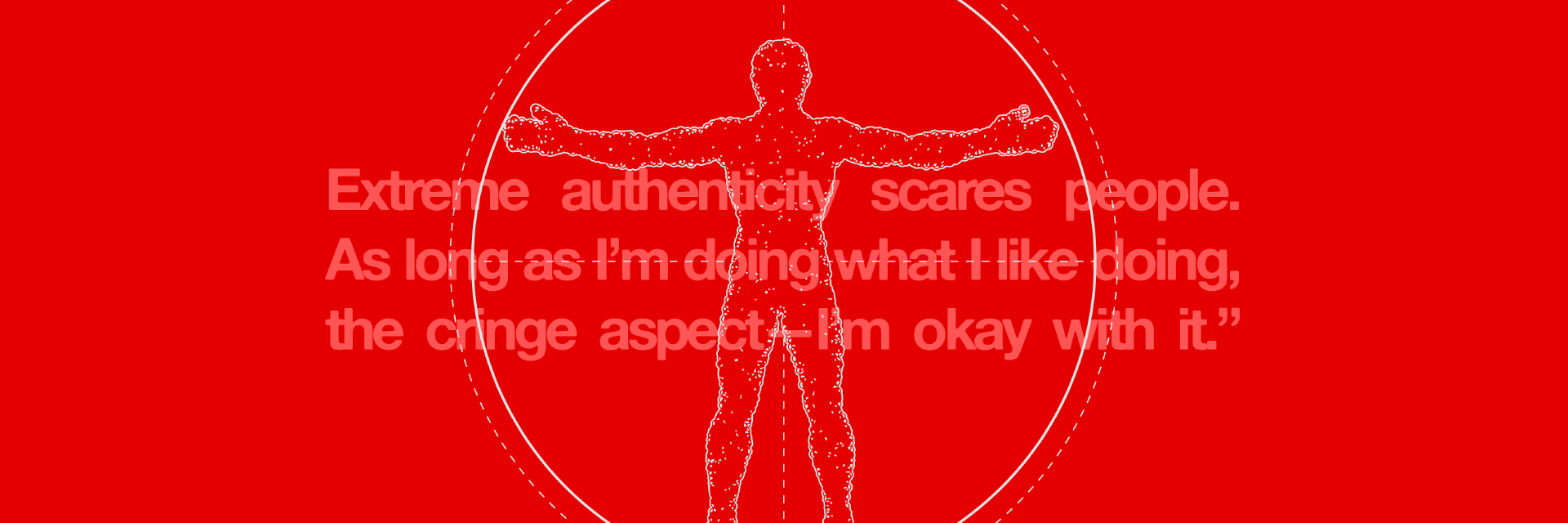
The descent from the summit is not about arriving at a final destination. It’s about realizing you were never meant to stop climbing. Those who linger too long in one spot risk plateauing. In this phase, creators learn that coolness is a mirage. It isn’t the absence of effort but the mastery of making effort invisible. Emma Chamberlain went from chaotic teen vlogger to composed, Loewe-clad cultural fixture on the Met Gala red carpet. The cringe became couture. As Toly observes, “Extreme authenticity scares people… As long as I’m doing what I like, the cringe aspect—I’m okay with it.” The key is embracing the tension between vulnerability and performance.
Cringe culture is, at its core, society’s allergy to vulnerability. But the future belongs to those who are immune: the ones who keep posting and keep putting themselves out there.
To climb Cringe Mountain is to step willingly into discomfort, allowing the world to see you in progress and confronting the absurdity of modern selfhood. Noah frames it as a choice between influence and validation: “You post for validation sometimes, but I focus on what I value most: creativity, fashion, sneakers.” Actual impact comes from what you choose to contribute, not the reactions you receive. And when you reach the other side, not unscathed but wiser, you realize the cringe was never the obstacle; it was beginning your ascent.