A Second Skin: Designing for the Senses
Fashion has been around for centuries. What’s new is the way we understand how we wear garments. What we feel. How we act.

Long before “sensory design” became a buzzword, philosopher Richard Shusterman proposed that the soma—the lived body itself—is a site of intelligence. In the late 1990s, he coined somaesthetics, a way of thinking that centers the lived body as the origin point of identity and perception. His premise was that aesthetics don’t start with what we see. It starts with what we feel.
Fashion is a system built on speed, while somaesthetics offers the world a pause. It shifts the general question from How does it look? to What does it do to you? Seen through this lens, clothing stops being a static object and becomes a relationship between the wearer and the worn. The body becomes a user and the garment is the emotional experience guided through its movement.
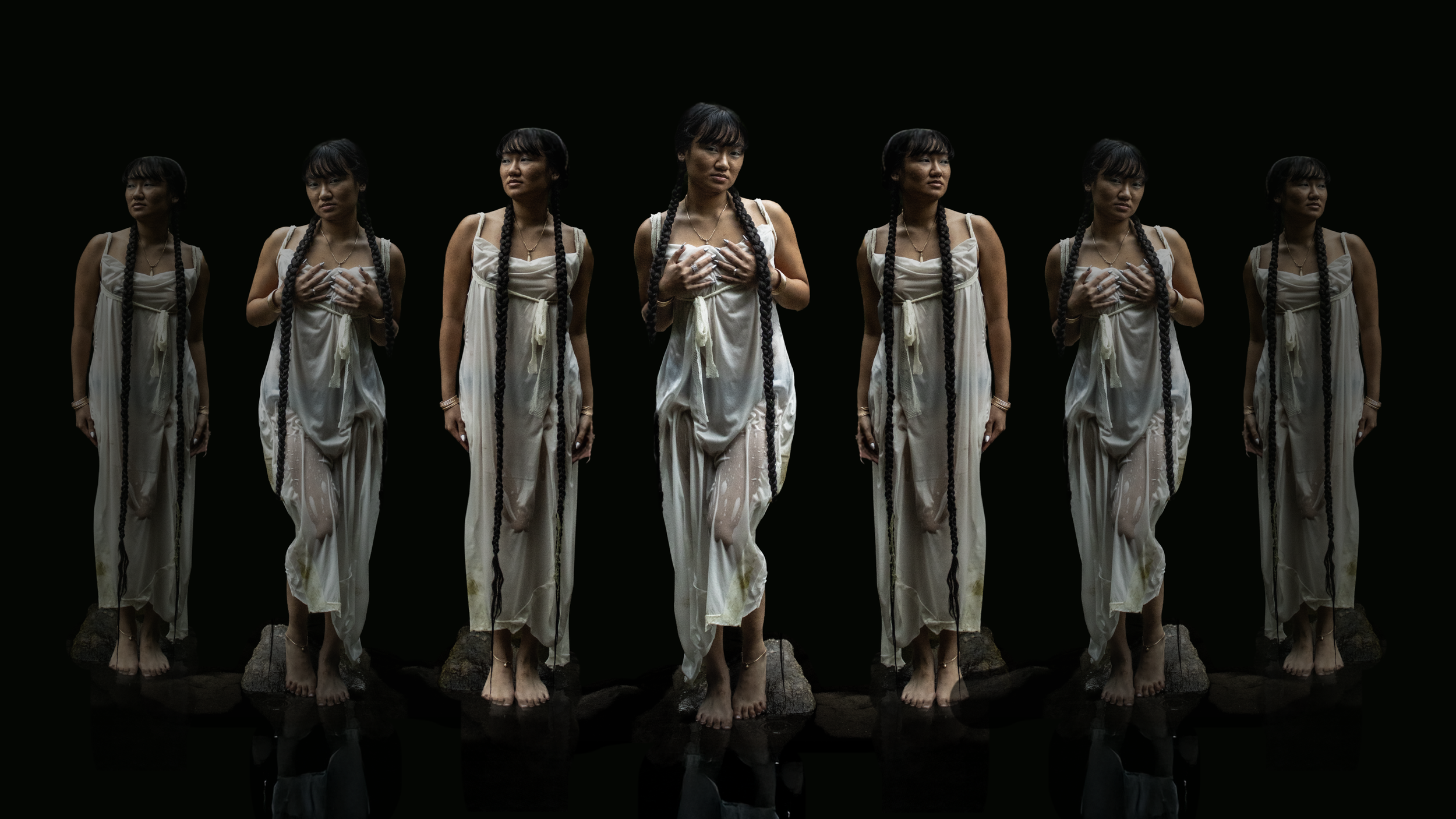
Fashion That Thinks Through the Body
Shusterman believed beauty lives in the senses, where the weight, pressure, balance, and rhythm of the tangible become a story. Traditional aesthetics felt limiting to him—too obsessed with the visual. His concepts held that touch matters, along with comfort, and that objects shape themselves around a user.
Shusterman’s theories can easily be translated into the fashion world. It becomes embodied thinking: revealed in the smallest details down to pressure at the waist, a drag at the hem, softness at the collarbone, how a fabric cools, compresses, or releases the body in motion.
Designers have been using these theories, both intentionally and unintentionally, for decades. Issey Miyake’s work remains one of the clearest examples. Her garments are designed to move, fold, and breathe with the body, creating awareness through repetition and motion. Hussein Chalayan treated clothing as architecture, while Iris van Herpen continues to blur the line between garment, body, and environment.
More recent designers like Eckhaus Latta, Bode, and Grace Wales Bonner approach the body less as an idealized form and more as an emotional, imperfect, lived-in form. Identity is a common theme of outward expression through inward somaesthetic thinking.
Materials That Carry Memory
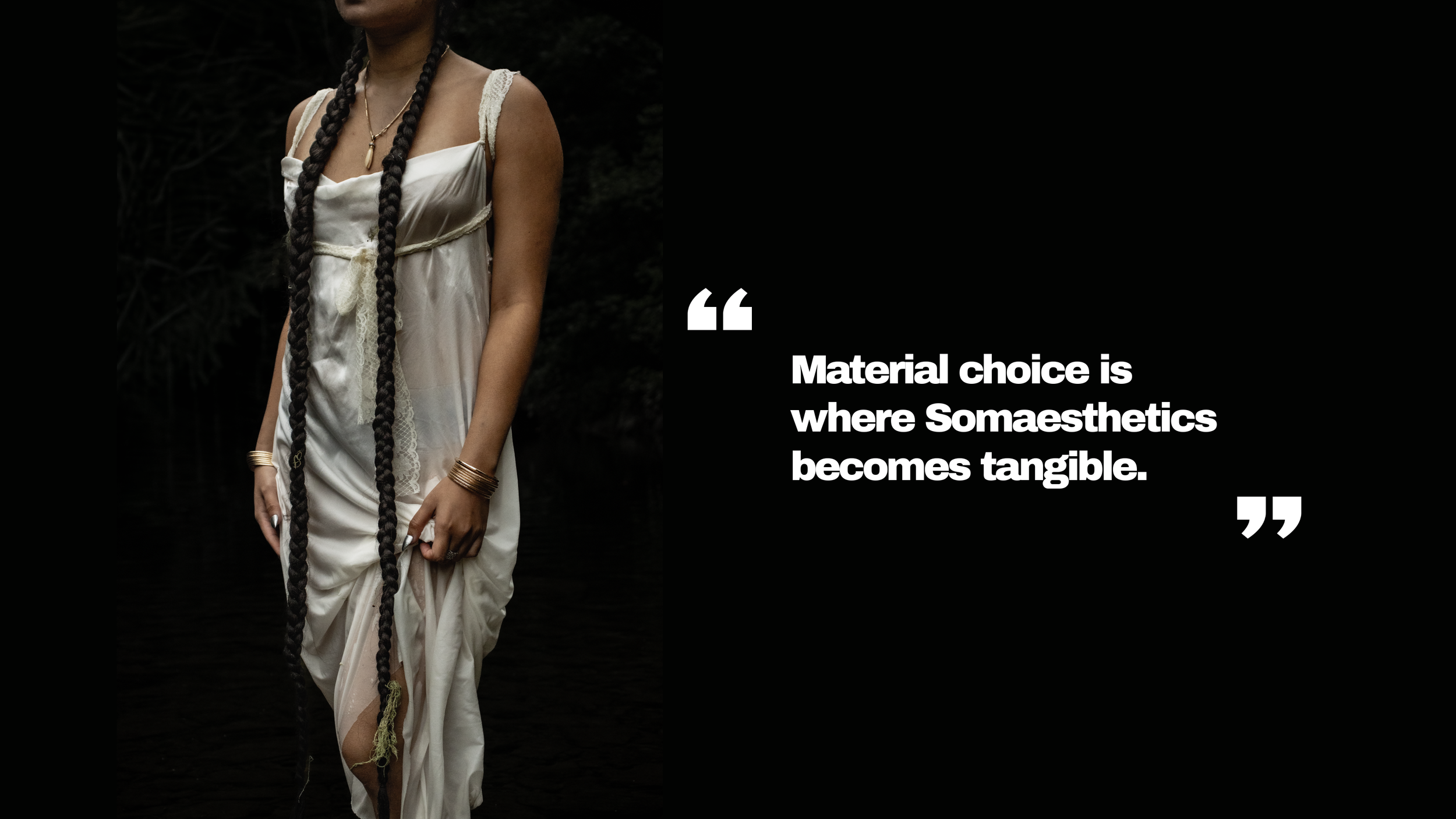
Material choice is where somaesthetics becomes tangible.
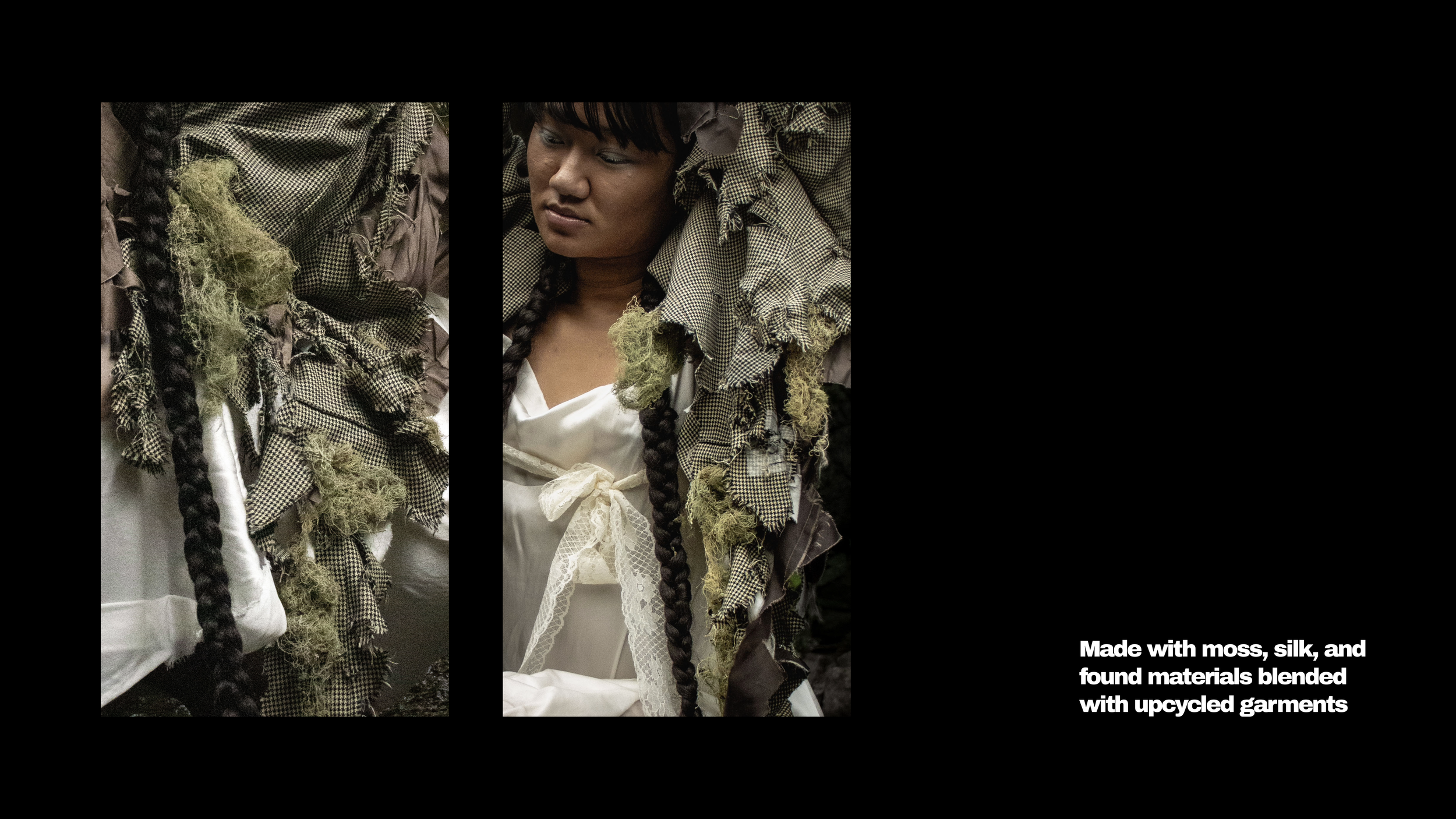
This look is made from an upcycled blazer, collected moss, and scraps of silk and lace. These materials were selected not for their appearance, but for how they register against the body.
Upcycled garments come with a past. They’ve already been broken in by someone else’s movement, heat, and time. Moss introduces something almost alive. Soft and irregular, damp to dry to damp again. Against the skin, it blurs the boundary between garment and environment, reminding the wearer that the body exists in nature just as the materials do. Designers like Craig Green and Paolina Russo have explored similar concepts, using organic textures to disrupt silhouettes and reintroduce the rawness of nature.
Silk and lace heighten sensitivity. As the fabric skims the body, the fine texture, often deemed delicate or decorative, tells another story of tension between perception and introspection.
Gender, Identity, and Body Mapping
Shusterman encouraged people to examine their bodily awareness as a form of knowledge. Through a fashion lens, this is a rebellion against how society views outward identity.
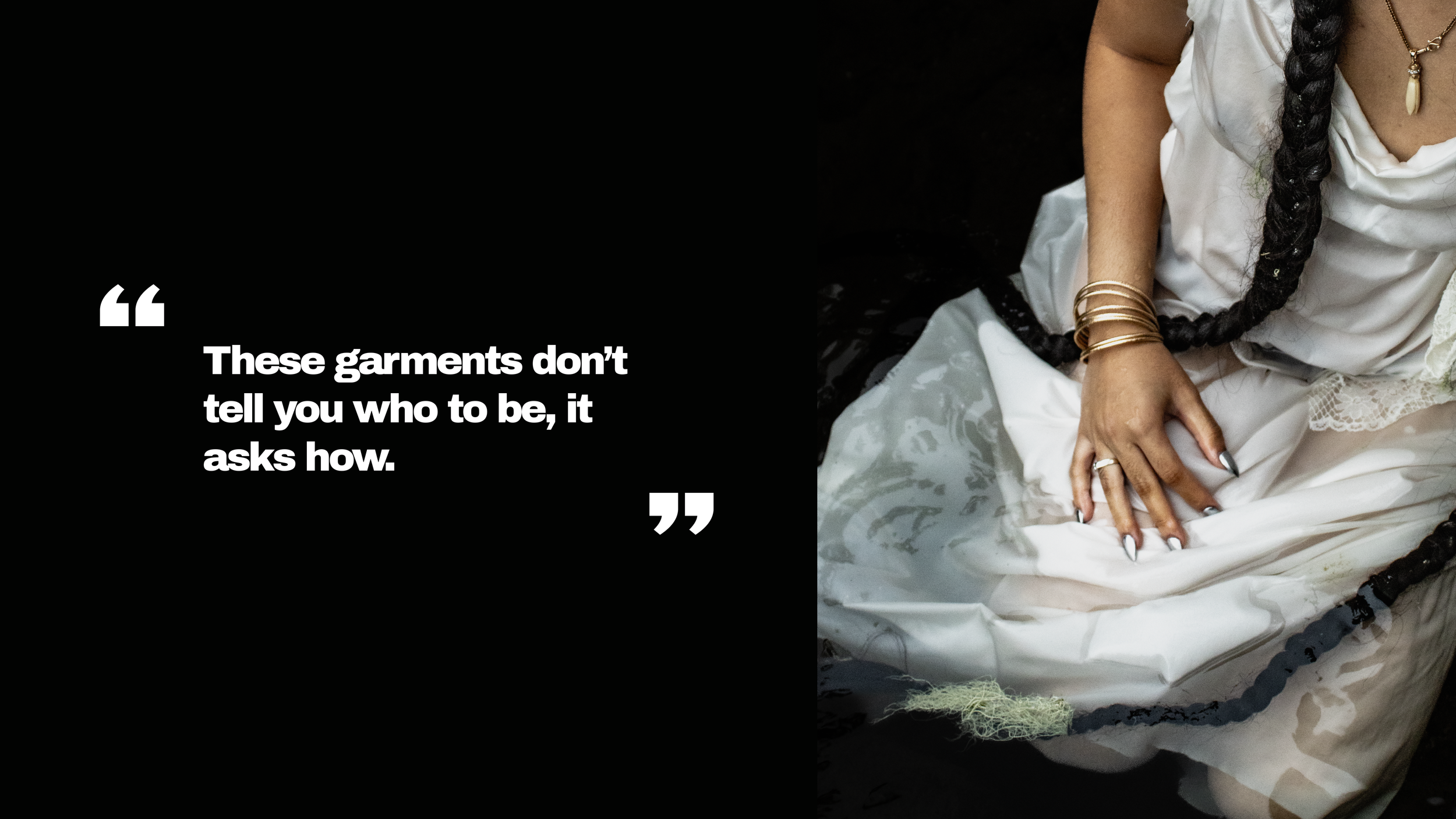
To dress somaesthetically is to start inward. Designers working in somaesthetic environments create garments that feel emotionally expressive. These garments don’t tell you who to be; they ask how, how you feel when you move, when you dance, when you sing.
Emerging designers are making these ideas literal through body mapping, scanning, and responsive construction. Emotional states are traced across the body, tracking breath, temperature, or heart rate, thus becoming a reactive technology. Responsiveness is a large theme in somaesthetic design, fostering pieces that protect or respond to the wearer’s nervous system.
Toward an Embodied Future
Somaesthetics suggests that fashion’s next evolution won’t be driven by trend cycles or even sustainability alone, but by embodiment. The future of fashion prioritizes clothing that grounds you. Slows you down. Reminds you there’s a body underneath the look.
Design, in this sense, becomes a form of care. Fashion has always shaped how we’re seen. Somaesthetic fashion asks something more radical: How do we want to feel in our bodies, and who do we become when we actually listen?